
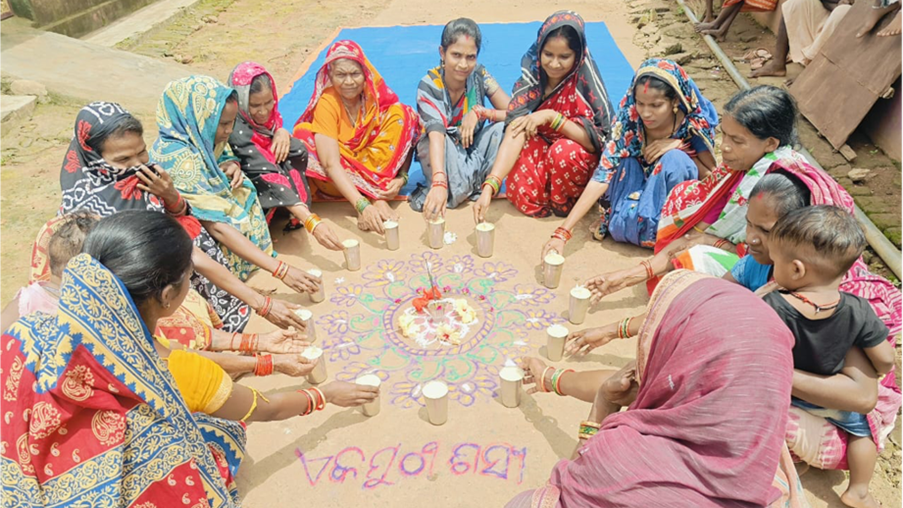
In the forests of Kandhamal, in the eastern Indian state of Odisha, there is something very special going on.
This is a poor region, where entire villages can be classified as living ‘Below Poverty Line’ and therefore in need of government assistance.
What’s more, it is home to many members of the Adivasi (tribal) community, who are among the poorest and most vulnerable groups in the country.
The village of Ladimaha is typical of the area, with the population facing ongoing economic constraints and regular food shortages.
But they’ve decided to do something about it for when times get particularly tough.
Spearheaded by the local women, they have come together to create a grain-pooling initiative, which ensures everyone has enough to eat during critical periods of need.
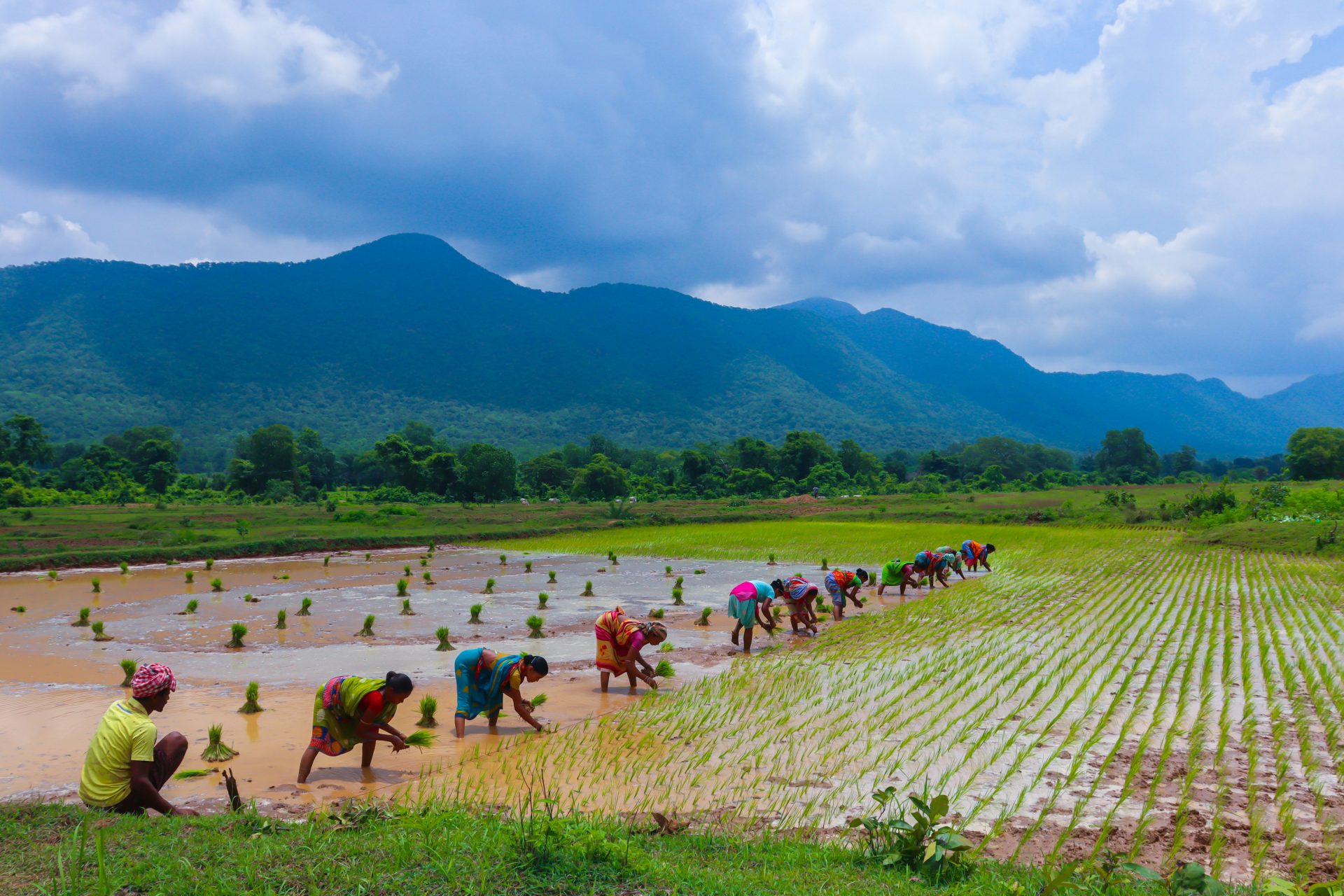
The concept is simple: individuals contribute regular amounts of grain to the pool, which is stored and distributed as necessary, such as to families facing heightened shortages or those suffering from malnutrition.
It is called Ek Muthi Anaaz – which translates to ‘A Handful of Grain’ – showing that even small contributions, when added together, can provide for those who need it most.
The initiative is run by the Shanti Maitree organisation, which is supported by the national rights’ group Lok Manch (People’s Forum), a partner of Jesuit Missions.
Trust and flexibility are key to the success of the scheme.
Contributions are not fixed; the villagers give based on the result of their harvest. If it is a positive season, they will add to the pool, if it is less so, they may need to dip into it.
It is managed by female volunteers who are responsible for the pooling process and allocating the grain.
“[Women are] active managers of community resources – a critical dimension of female empowerment.”
This positions women “not as passive beneficiaries but as active managers of community resources – a critical dimension of female empowerment,” Shanti Maitree says.
Furthermore, it has taken the decision to focus on immediate access to food – rather than finance and credit schemes – as this best fits the pressing needs of such societies.
And the impact of the programme in Ladimaha has seen other villages in the region follow suit, adopting a similar model and with reports of similar successes.
“The expansion reflects how an innovation that emerges from one community can inspire replication when neighbouring communities witness its effectiveness and feasibility,” organisers say.
Inspirational, it certainly is.
More news
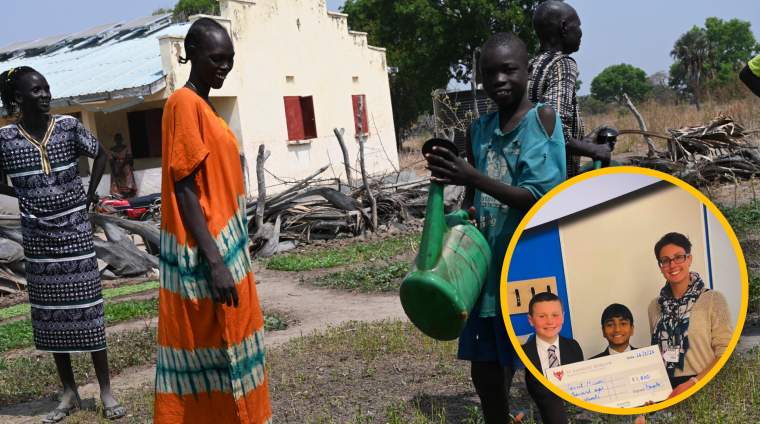
Jesuit Missions’ projects in South Sudan inspire Salford school’s fundraising drive
From 42°C heat to catastrophic downpours: how climate change is hitting South Sudan
The Society of Jesus and Jesuit Missions in Africa: from the 16th Century to the present day

International Women’s Day 2026: spotlight on female success stories from our projects
help us continue our vital work
With your support, we can continue our work improving the lives of those who need it most.