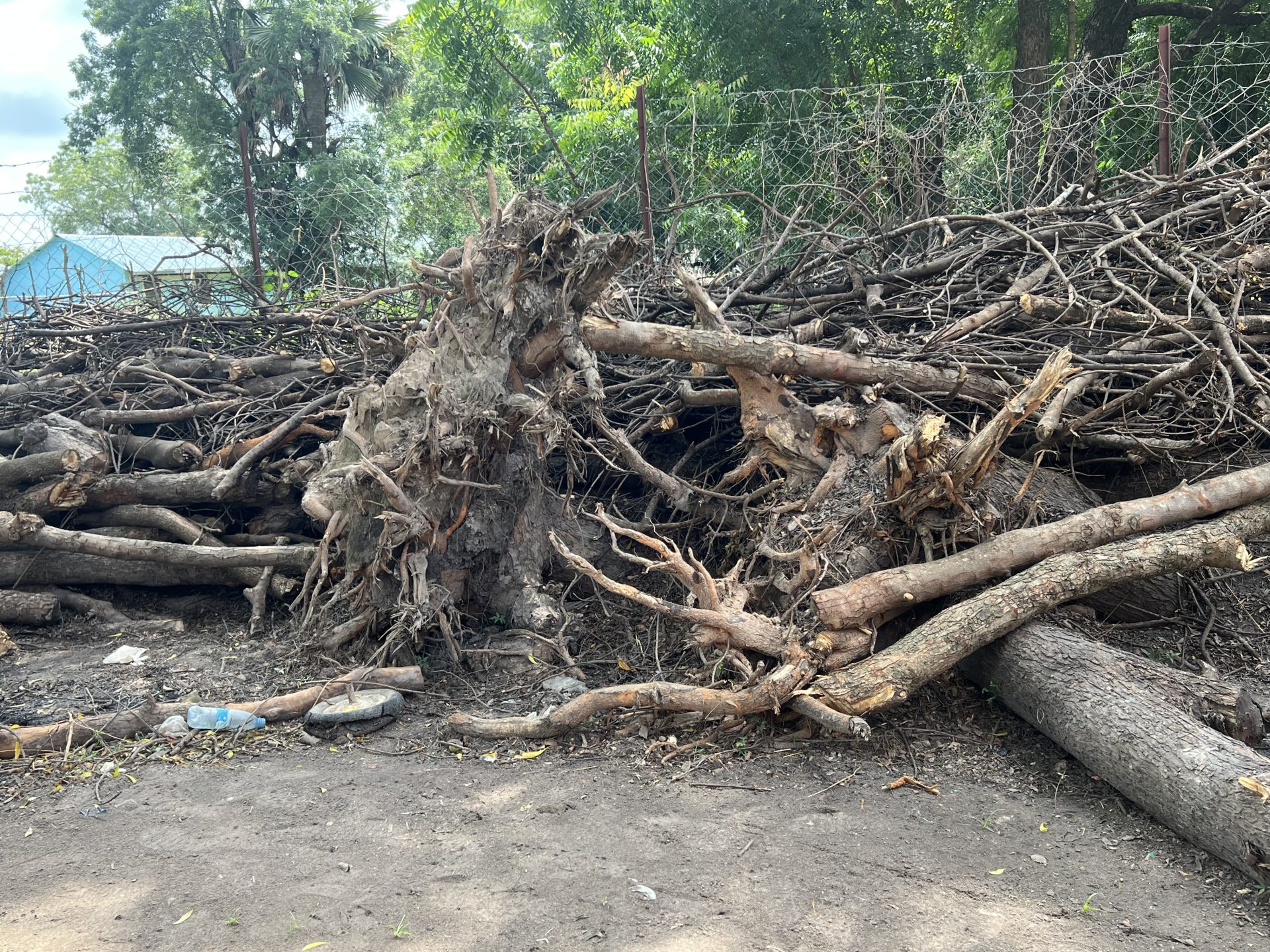
Climate change continues to seriously impact the people of South Sudan, with extreme weather patterns leading to school closures, damaged harvests and mass rubbish build-up.
Our partner organisations in the country – which support projects linked to agriculture, education and refugee support – explained how issues such as scorching heat and severe flooding are affecting people’s lives.
For example, with temperatures reaching up to 42°C, education ministers took the decision to close several schools, which has “significantly disrupted” children’s education.
Small-scale farmers, many of them female and the sole providers for their families, have been hit by drought, resulting in a loss of income and scarcity of staple crops.
And cities close to the Nile, including the South Sudanese capital, Juba, have suffered the effects of extreme flooding, with buildings damaged and vital waterways blocked with plastic bottles and other forms of rubbish.
The Jesuits in the region acknowledged that a global failure to respond to climate change will have damaging consequences for many in South Sudan.
“These factors intensify the vulnerability of communities already struggling with limited resources,” a spokesperson for Jesuits Eastern Africa said.

They have been raising awareness of the impact of climate change – for example through radio programmes in Rumbek and environmental clubs in Wau – and will continue to highlight the effect it has on the country’s land and population.
“Efforts are being made to reflect a growing commitment [in South Sudan] to join global efforts in combatting climate change and protecting the environment for future generations,” the spokesperson added.
This information comes alongside a report published earlier this month by the World Meteorological Organisation, which showed the earth’s energy imbalance is the highest it has ever been.
It means the planet’s system is absorbing much more energy than it is releasing, which contributes to higher temperatures, rising sea levels and increased extreme weather patterns.
António Guterres, United Nations Secretary-General, said: “The state of the global climate is in a state of emergency. Planet Earth is being pushed beyond its limits. Every key climate indicator is flashing red.”
Jesuit Missions has consistently campaigned on the issue of climate change, noting the impact it has on many of our partners working in some of the poorest and most climate-vulnerable places in the world.
More news
The Society of Jesus and Jesuit Missions in Africa: from the 16th Century to the present day

International Women’s Day 2026: spotlight on female success stories from our projects

Jesuit leadership programme offers hope to young people from war-torn Myanmar