By Jules Gibson, Community Engagement Manager at Jesuit Missions
On Wednesday (4 November), pupils from St Joseph’s Primary School, Hurst Green, Stonyhurst College and St Aloysius College, Glasgow, joined forces with Jesuit Missions for a day of climate action, collaboration and international advocacy, giving young people the opportunity to make their voices heard on the global climate crisis.
The day began with a climate demonstration in the village of Hurst Green. Building on our Season of Creation theme of preserving and protecting water, pupils from Years 5 and 6 created colourful placards and banners highlighting their concerns about climate change and calling on everyone to care for our common home.
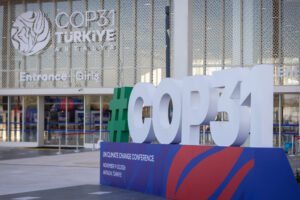
The demonstration was supported by Paul Chitnis, the British Province’s Delegate for Social and Ecological Justice, and Daniela Alba, Advocacy Coordinator for Social and Ecological Justice at the Jesuit Curia in Rome. Pupils’ placards from the protest will also be taken by Daniela to be presented at COP31, the United Nations Climate Change Conference in Antalya, Türkiye. This will give world leaders and international representatives the opportunity to hear the hopes and concerns of our young people.
Young people take the lead at Mini Climate COP
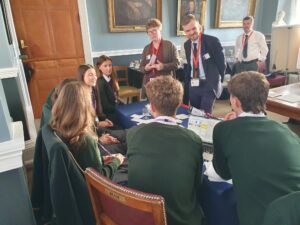
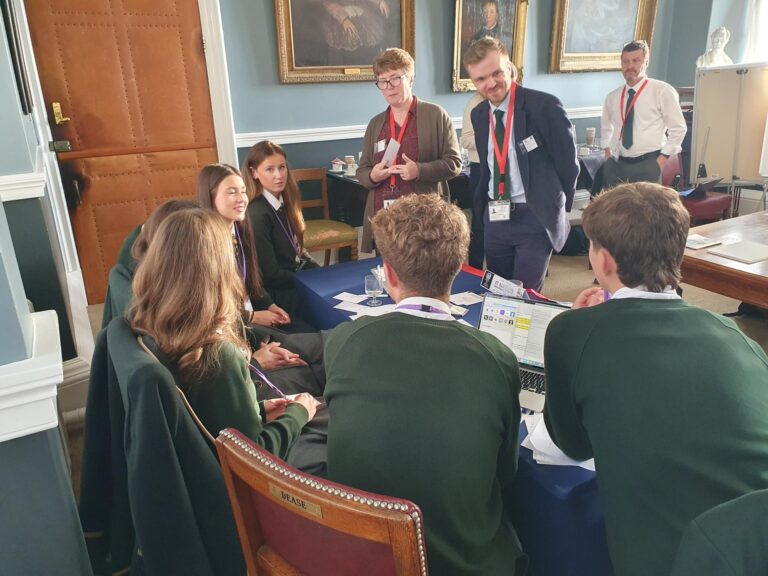
The demonstration was followed by an inaugural Mini Climate COP Conference, hosted by Stonyhurst College, with pupils from the College and St Aloysius College, Glasgow, taking on the roles of international delegates in the lead-up to COP31.
The conference challenged pupils to consider the real-life consequences of climate change, particularly the impact of water scarcity, poor infrastructure and flooding on some of the world’s most vulnerable communities.
Students from St Aloysius College represented Madagascar, identifying three significant challenges facing the country: Poor water infrastructure: An unreliable public water supply can leave communities without access to water for hours or even days. Reliance on boreholes: Poor sanitation can lead to contamination of borehole water, creating serious risks to public health. Flooding in low-lying areas: Heavy rainfall disproportionately affects communities living in poorly constructed housing, with climate change increasing the intensity of rainfall.
In response, the delegates proposed an ambitious solar-powered desalination project. Desalination, the process of removing salt and other impurities from seawater to produce freshwater, could offer a sustainable solution to water shortages. Their proposal called for an investment of £25 million over five years, supported through grants from countries around the world, development organisations, charitable foundations and private-sector partnerships.
Meanwhile, Stonyhurst College pupils represented South Sudan, focusing on the interconnected challenges of water scarcity and flooding. Their proposed priorities centred on five key areas: Flood defences and protection, water treatment and storage, sanitation and waste treatment, water purification, rainwater harvesting.
Collaboration, negotiation and hope for the future
The proposals were presented to a COP Presidency panel comprising of Jonathan Heard, Director of Jesuit Missions; Paul Chitnis; Daniela Alba; and Sister Philomena Le Gall, a Dominican Sister and former UN Human Rights Lawyer.
The panel listened carefully to the delegates, challenged their thinking and asked questions about the feasibility and impact of their proposals. The students were then tasked with prioritising their plans, with the panel making clear that funding would need to be directed towards just one area; water projects connected to community health.
This led to an important period of negotiation between the two schools. The delegates had to consider how best to support one another’s needs while remaining true to the priorities of the countries they represented.
The pupils approached this challenge with remarkable maturity, confidence and eloquence. They demonstrated an impressive ability to listen, consider different perspectives, negotiate and work collaboratively towards solutions to complex global issues.
The conference was a wonderful example of our young people putting the values of social and ecological justice into action. They showed genuine concern for communities most vulnerable to climate change and a determination to ensure that their voices are heard.
It was particularly encouraging to see pupils engaging so thoughtfully with the challenges facing other parts of the world, recognising that caring for our common home requires solidarity, cooperation and a willingness to act together.
If world leaders approached international climate negotiations with the same spirit of understanding, compassion and collaboration demonstrated by these young delegates, there would be real hope for a more sustainable and equitable future. Let us keep all those taking part in the discussions in Türkiye from Monday 9th November in our prayers, that they may approach the challenges ahead with wisdom, compassion and a shared commitment to protecting our common home.
The next Mini Climate COP is scheduled to take place in London on Friday (13 November).