
The failure to reach a central agreement at COP31 shows there is still a long way to go when it comes to tackling climate change at an international level.
Despite extending the talks by an extra two days – making it the longest UN climate conference in history – delegates could not agree a pact that would satisfy all parties.
A key stumbling block seemed to be the language around the phasing out of fossil fuels, with major oil and gas producing nations unprepared to sign off on certain commitments. Then there was the issue of where money needed to combat the effects of climate change should go – and who should pay for it.
These are familiar problems, but as global temperatures and the frequency of extreme weather events continue to increase, they need addressing quickly.
And, ultimately, it will be the countries that are most at risk of the impact of climate change, and those which have, often, done little to cause these issues, that suffer first and hardest.
Jesuit Missions works with several communities across the world which fall into these categories. In South Sudan, small-scale famers must regularly cope with periods of both drought and flooding. In Madagascar, young people are attempting to reverse the effects of deforestation. In India, human rights organisations battle to ensure marginalised groups have access to food and shelter.
Such issues were highlighted recently at Jesuit Missions’ ‘Mini COP’ events, which brought pupils from Jesuit schools together to mimic events in Türkiye and reflect on the challenges faced by those in other parts of the world.
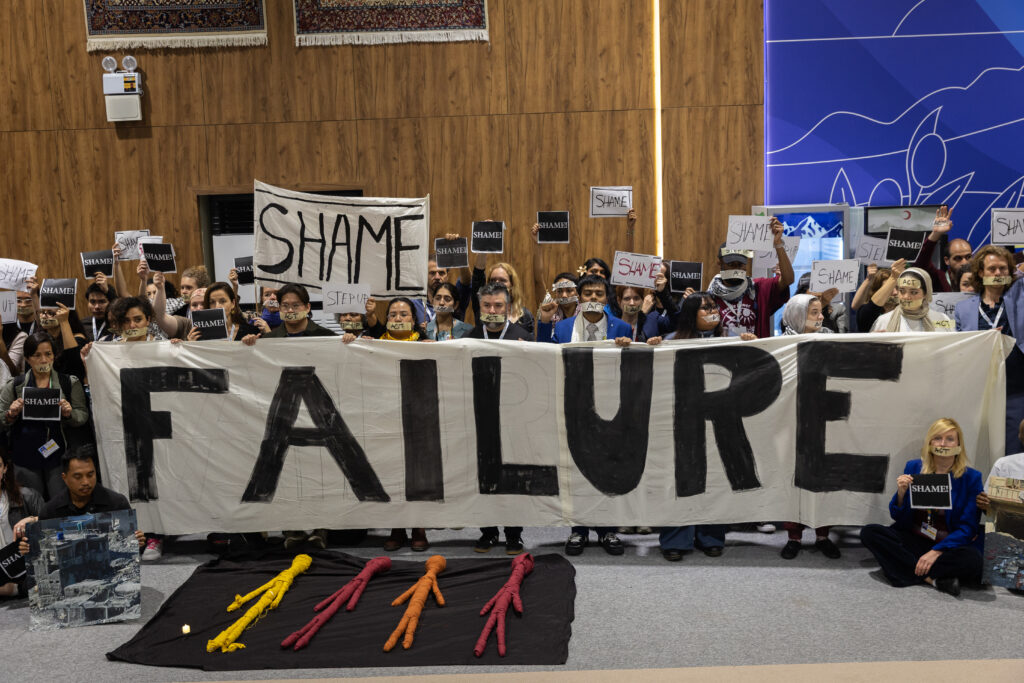
Despite the disappointment of a lack of final agreement, there were some glimmers of hope coming from the exhibition halls in Antalya.
Funding secured from ‘carbon credits’ – collected in exchange for releasing greenhouse gases – will be given to climate vulnerable nations to help them manage the impact of climate change. Proposals for the advancement of a just transition towards clean energy that protects local communities were also agreed.
Elsewhere, it was acknowledged that there have been clear, beneficial advancements when it comes to the use of renewable energy, which could provide solutions at a bigger scale in the future.
Those living and working in Africa – a continent disproportionally affected by climate change – are optimistic that next year’s COP, to be held in Addis Ababa, Ethiopia, will shine a spotlight on conditions there and provide more of an opportunity for their voices to influence proceedings.
These positives, however, cannot hide the fact that governments remain deadlocked on major climate issues. The plan agreed in Paris in 2015 to limit the earth’s temperature to 1.5C above pre-industrial levels looks to have failed. And many are questioning whether the current COP process is fit for purpose.
As the world looks ahead to COP32, the idea that something needs to change, and that there is little time to lose, will be felt keenly.
Jonathan Heard, Director of Jesuit Missions, said: “We work with many partners who are fighting to mitigate the impact of climate changes on their communities.
“While the carbon credit agreements will provide some assistance, unless we see a global commitment to reducing greenhouse gas emissions, we cannot escape the cycle of increasing temperatures and therefore the need for increasing mitigation actions, trapping people in poverty and dependency.”